


Every year on March 16, India pauses to celebrate one of the most powerful public health milestones in its history. National Vaccination Day 2026 marks another chapter in the country’s decades-long commitment to immunization, disease prevention, and the protection of millions of lives. From newborns in remote villages to adults in urban centers, vaccination remains the most cost-effective tool modern medicine has ever known.
At Sarvodaya Hospital Guwahati, we believe informed communities make healthier choices. This comprehensive guide answers every key question about National Vaccination Day 2026 — when it is, why it matters, who pioneered immunization in India, the seven types of vaccines you should know, and how you can participate meaningfully this year.
When Was National Vaccination Day First Observed?
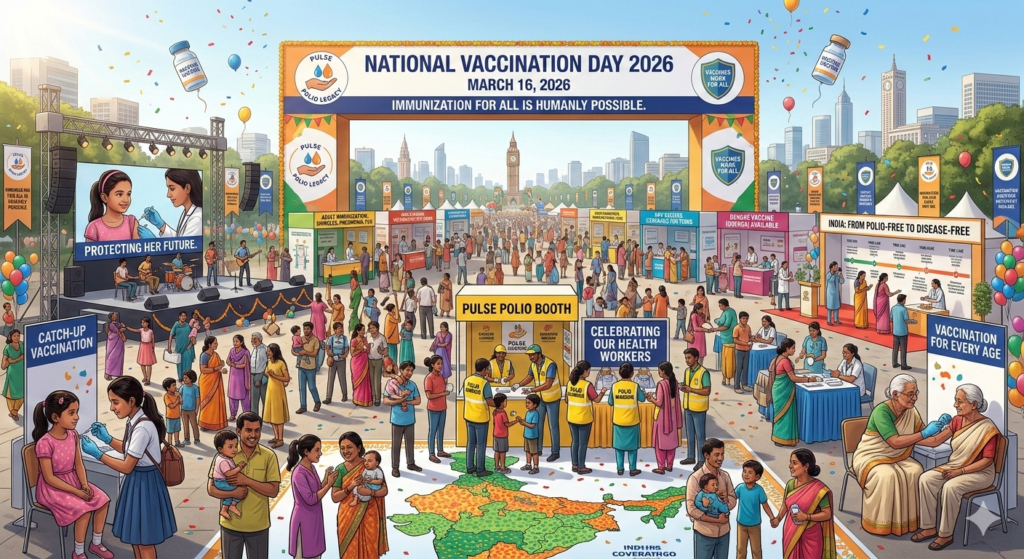
National Vaccination Day, also known as Anti-Polio Day, was first observed on March 16, 1995. On that historic day, India launched the Pulse Polio Immunization Programme, a government-led campaign to eradicate polio from the country. The first oral polio vaccine was administered to children under five, marking the beginning of one of the world’s largest immunization drives.
The significance of that date has only deepened over time. India was officially declared polio-free by the World Health Organization (WHO) in March 2014 — a triumph that took nearly two decades of sustained effort, community outreach, and relentless vaccination campaigns. National Vaccination Day is observed every year on March 16 to commemorate that foundational first step and to reinforce the culture of preventive healthcare.
When Is National Vaccination Day 2026?
National Vaccination Day 2026 falls on Monday, March 16, 2026. The day is recognized across India with health camps, awareness drives, free vaccination clinics, and educational programs organized by government bodies, hospitals, NGOs, and community groups.
If you have been wondering when is National Vaccination Day 2026 and how to participate, mark your calendar now. Whether you are a parent checking your child’s immunization schedule, a caregiver for an elderly family member, or simply a health-conscious individual, this is the right time to review your vaccination status and take action.
What Is World Immunization Day?
It is common to confuse National Vaccination Day with World Immunization Day. Here is the difference:
- National Vaccination Day — observed in India on March 16 each year, rooted in the launch of the Pulse Polio campaign.
- World Immunization Week — a global WHO initiative observed in the last week of April each year, focused on promoting the use of vaccines to protect people of all ages from disease.
World Immunization Week was introduced by the WHO to highlight the collective action needed to ensure that everyone, everywhere, is protected by life-saving vaccines. It runs annually from April 24 to 30 and coordinates campaigns across more than 180 countries.
Both observances serve the same ultimate purpose: to champion vaccination as a fundamental pillar of public health and to close the immunity gap in underserved populations.
Who Is the Father of Vaccination in India?
When discussing who is the father of vaccination in India, two names stand out prominently in history.
1. Edward Jenner — The Global Pioneer
The concept of vaccination itself was introduced by Edward Jenner in 1796, when he developed the first vaccine against smallpox using cowpox material. His groundbreaking work laid the foundation for all modern immunology and is recognized worldwide as the birth of vaccination science.
2. Dr. Soumya Swaminathan — India’s Immunization Champion
In the Indian context, Dr. Soumya Swaminathan is widely regarded as one of the foremost contributors to immunization research and policy. A globally recognized pediatrician and former Chief Scientist at the WHO, she has championed vaccine access for children and developing nations throughout her career.
3. The Universal Immunization Programme (UIP)
India’s institutional commitment to vaccination took shape with the Universal Immunization Programme (UIP), launched in 1985. This national program now covers vaccines for twelve vaccine-preventable diseases and has been one of the largest immunization programs in the world in terms of geographic coverage and target population.
What Are the 7 Types of Vaccines?
Understanding what are the 7 types of vaccines is essential for making informed healthcare decisions. Vaccines are not one-size-fits-all — they use different scientific approaches to train the immune system. Here is a comprehensive breakdown:
- Live-Attenuated Vaccines
These vaccines use a weakened (attenuated) form of the live virus or bacterium. Because the pathogen is alive, the immune response is strong and long-lasting. Examples: MMR (measles, mumps, rubella), chickenpox, yellow fever, and oral polio vaccine (OPV) — the same vaccine used in India’s original Pulse Polio campaign.
- Inactivated Vaccines
Made from killed versions of the pathogen, these are more stable and safer for immunocompromised individuals. Examples: Inactivated polio vaccine (IPV), hepatitis A, rabies, and some influenza vaccines.
- Subunit, Recombinant, and Conjugate Vaccines
These vaccines use specific pieces of the pathogen — such as proteins or sugars — to trigger immunity. They are highly targeted and have fewer side effects. Examples: Hepatitis B, pertussis (whooping cough), HPV, and the Hib vaccine for children.
- Toxoid Vaccines
Rather than targeting the pathogen itself, these vaccines neutralize the toxin produced by the bacteria. Examples: Tetanus and diphtheria vaccines, both critical components of India’s childhood immunization schedule.
- mRNA Vaccines
A newer technology brought to global prominence during the COVID-19 pandemic, mRNA vaccines instruct cells to produce a protein that triggers an immune response. No live virus is involved. Examples: Pfizer-BioNTech and Moderna COVID-19 vaccines. India is actively researching domestic mRNA vaccine platforms through ICMR initiatives.
- Viral Vector Vaccines
These use a modified version of a different virus (the vector) to deliver instructions to cells. Examples: Oxford-AstraZeneca (Covishield), Johnson & Johnson, and the Ebola vaccine. India produced Covishield at the Serum Institute, making it one of the largest vaccine manufacturers globally.
- DNA Vaccines
An emerging category, DNA vaccines introduce engineered plasmid DNA into cells to produce an immune response. Examples: ZyCoV-D, developed in India by Zydus Cadila, became the world’s first DNA vaccine to receive emergency authorization, approved for COVID-19 in 2021. This marks a proud milestone in Indian vaccine science.
India’s Vaccination Milestones: A Legacy of Commitment
India’s immunization journey has been defined by scale, resilience, and innovation. Key milestones include:
- 1978 — Expanded Programme on Immunization (EPI) launched, targeting diphtheria, whooping cough, tetanus, polio, typhoid, and smallpox.
- 1985 — Universal Immunization Programme (UIP) expanded to cover all districts nationwide.
- 1995 — Pulse Polio Immunization Programme begins; National Vaccination Day inaugurated.
- 2014 — India certified polio-free by WHO.
- 2017 — Mission Indradhanush launched to reach unvaccinated and partially vaccinated children.
- 2021 — India administers the world’s largest COVID-19 vaccination drive.
- 2026 — National Vaccination Day continues to build on this extraordinary legacy.
These achievements did not happen by accident. They were the result of coordinated government action, community trust, healthcare worker dedication, and the unwavering belief that no child should die from a preventable disease.
How to Celebrate National Vaccination Day 2026
National Vaccination Day 2026 is not just a date to observe — it is an opportunity to act. Here are meaningful ways to participate:
1. Check Your Vaccination Records
Review your own immunization history and that of your family members. Consult your doctor about any vaccines you may have missed, including adult boosters for tetanus, hepatitis B, or influenza.
2. Attend a Free Health Camp
Hospitals, primary health centers, and government clinics across India organize free vaccination drives on this day. Sarvodaya Hospital Guwahati encourages patients and community members to visit our facility for vaccination consultations and health check-ups.
3. Spread Awareness on Social Media
Use the hashtags #NationalVaccinationDay2026 and #VaccinateIndia to share credible information. Counter vaccine misinformation by sharing resources from trusted sources like the Ministry of Health & Family Welfare and WHO India.
4. Support Local Immunization Workers
ASHA workers, ANMs, and healthcare volunteers are the backbone of India’s immunization infrastructure. Acknowledge their work, support their efforts, and facilitate vaccination access in your community.
5. Educate Children and Families
Use this occasion to have age-appropriate conversations about why vaccines matter. Schools, anganwadis, and community centers can organize awareness sessions to build a culture of preventive health from an early age.
The Role of Sarvodaya Hospital Guwahati in Preventive Health
At Sarvodaya Hospital Guwahati, preventive healthcare is at the heart of everything we do. As one of the most trusted hospitals in Guwahati, we offer comprehensive vaccination services for children, adults, and travelers. Our team of experienced pediatricians and general physicians ensures that your immunization schedule is up to date, personalized, and aligned with the latest national and international guidelines.
Whether you need routine childhood vaccines, travel immunizations, or adult boosters, our medical team is here to guide you with evidence-based care and compassion.
Conclusion: Every Dose Counts
National Vaccination Day 2026 is a reminder of what collective action can achieve. From the eradication of smallpox to the defeat of polio, vaccination has rewritten the story of human health. As India looks toward a future free from preventable diseases, each immunization — whether given to a newborn in a rural health center or a senior citizen in an urban clinic — is a step closer to that goal.
Now that you know when is National Vaccination Day 2026, what World Immunization Day means, who pioneered immunization in India, and what are the 7 types of vaccines, you are equipped to make informed, proactive choices for yourself and your family.
Take action this March 16. Get vaccinated. Spread awareness. Protect lives.
For vaccination consultations, health check-ups, and emergency medical care, visit us at Sarvodaya Hospital Guwahati.