

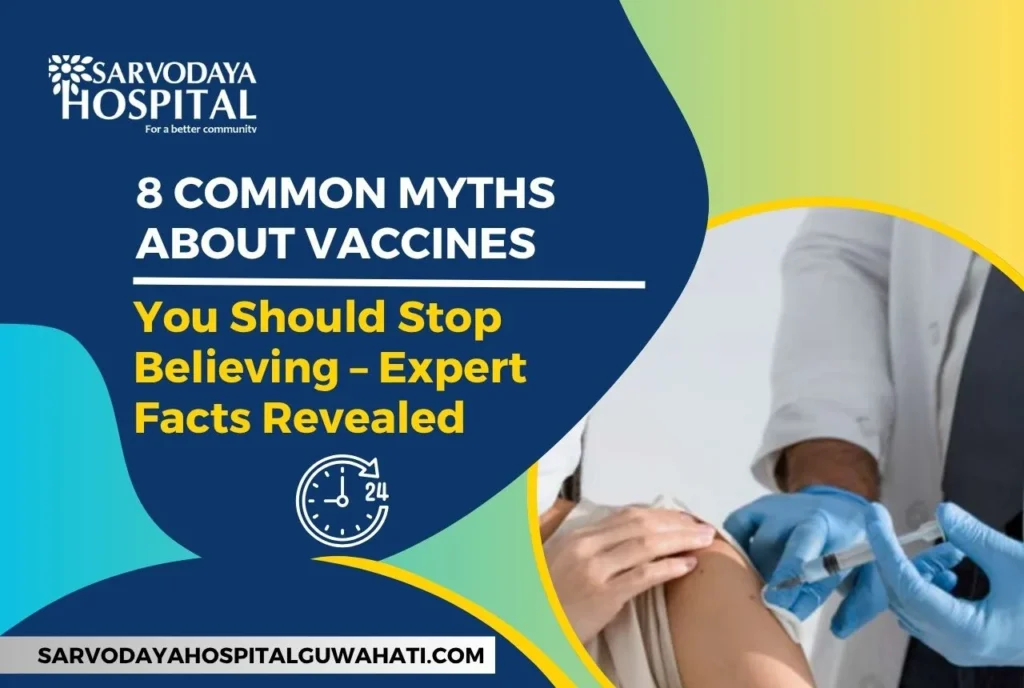

Understanding and debunking common myths about vaccines is crucial, as vaccines are one of the most effective public health tools in history—responsible for preventing countless cases of infectious diseases and saving millions of lives globally. According to CDC estimates, vaccines have saved over 1.1 million lives of children born between 1994 and 2023 alone.
Yet, despite their proven success, a growing number of individuals—approximately 20% of parents—are expressing hesitancy toward vaccination. This hesitancy often stems from widespread misinformation and unfounded fears.
In this article, we aim to break down and debunk the most common myths about vaccines using insights and evidence from global health experts. Sarvodaya Hospitals, recognized as one of the best general hospitals in Guwahati, strongly supports vaccine awareness and public education.
Through this blog, we hope to clear misconceptions and encourage informed decisions that protect both individuals and communities.
Understanding Common Myths About Vaccines
Despite overwhelming scientific consensus on the safety and effectiveness of vaccines, myths and misconceptions continue to circulate widely. These false claims are often amplified through social media, word of mouth, or misinterpretation of scientific data. As a result, misinformation poses a serious threat to public health by discouraging vaccination and contributing to the resurgence of diseases once under control.
Outbreaks of measles, polio, and whooping cough in various regions highlight the real consequences of declining vaccination rates. It’s more important than ever to combat these myths with clear, evidence-based facts. At Sarvodaya Hospitals, our medical experts actively educate patients and families about vaccine safety and address concerns with empathy and scientific clarity.
The 8 Most Common Vaccine Myths Debunked
1. Myth: Vaccines Cause Autism
This persistent myth originated from a now-discredited study by Andrew Wakefield published in 1998. The study was found to be fraudulent and has since been retracted. Numerous large-scale studies conducted globally have found no link between vaccines and autism.
Leading health organizations, including the WHO, CDC, and AAP, all confirm the absence of such a connection. Recent research points to genetic and early brain development factors as the true causes of autism, not vaccination.
2. Myth: Vaccines Contain Harmful Ingredients
Vaccines contain ingredients like preservatives, stabilizers, and adjuvants in extremely small, safe amounts. These components help preserve vaccine efficacy and enhance immune response. Substances like formaldehyde or aluminum are present in quantities far below harmful levels and are often naturally found in the human body.
Each vaccine undergoes rigorous safety testing and continuous monitoring to ensure its safety and effectiveness before and after it reaches the public.
3. Myth: Vaccines Overwhelm the Immune System
Some parents worry that giving multiple vaccines at once can “overload” a child’s immune system. However, the immune system is highly capable and encounters thousands of antigens daily through food, air, and environment.
Scientific research shows that combination vaccines are both safe and effective, and the current immunization schedule is carefully designed to provide timely protection without straining the immune system. Delaying vaccines unnecessarily can expose children to preventable illnesses.
4. Myth: Natural Immunity Is Better Than Vaccine-Induced Immunity
While natural infection can lead to immunity, it often comes with serious health risks, including hospitalization or long-term complications. Vaccines provide controlled exposure to antigens, allowing the immune system to build defenses without the danger of disease.
Studies show that vaccine-induced immunity offers strong and lasting protection. Furthermore, the concept of hybrid immunity (natural plus vaccine) is best achieved when vaccination occurs first, minimizing harm.
5. Myth: Vaccines Are No Longer Necessary
Because many diseases have become rare, some believe vaccines are no longer needed. This is a dangerous misconception. Herd immunity relies on a high percentage of the population being vaccinated to protect those who can’t be, such as infants or immunocompromised individuals.
When vaccination rates drop, outbreaks of diseases like measles or diphtheria quickly re-emerge, as seen in several countries recently. Global travel also means diseases can easily cross borders, making vaccination essential.
6. Myth: Vaccines Can Give You the Disease They Prevent
Some fear that receiving a vaccine might cause the illness it’s meant to prevent. Most vaccines use inactivated (killed) viruses, protein subunits, or mRNA, none of which can cause disease. Live attenuated vaccines use weakened forms of viruses, which very rarely cause illness in healthy individuals. Temporary side effects like mild fever or soreness are normal signs that the immune system is responding—not indicators of disease.
7. Myth: Vaccine Development Is Rushed and Unsafe
The belief that vaccines are developed too quickly, especially during public health emergencies, fuels skepticism. In reality, vaccine development follows strict protocols, including preclinical studies, clinical trials, and peer review. During crises like COVID-19, timelines were accelerated by overlapping trial phases and global collaboration—not by skipping safety steps.
Post-approval surveillance continues to monitor safety. Billions of doses have been administered worldwide with strong safety profiles.
8. Myth: Vaccines Contain Microchips or Alter DNA
Baseless conspiracy theories claim vaccines contain microchips or change human DNA. These claims are scientifically impossible. Vaccines, including mRNA vaccines, do not enter the nucleus of cells and cannot alter genetic material.
mRNA simply teaches cells to recognize and fight viruses and is quickly broken down by the body. Trusted health organizations urge the public to rely on verified sources and avoid spreading misinformation.
The Role of Healthcare Providers in Vaccine Education
Healthcare professionals play a pivotal role in building trust around vaccines. At Sarvodaya Hospitals, doctors take the time to listen to patient concerns, provide personalized explanations, and guide families through appropriate vaccine schedules.
Parents are encouraged to ask questions and access reliable resources for information. This empathetic, science-based approach ensures that vaccine decisions are made with confidence and clarity.
Final Thoughts on Common Vaccine Myths
Vaccination remains a cornerstone of public health, protecting individuals and communities from life-threatening diseases. In an age of misinformation, it’s crucial to separate myths from facts and rely on evidence-backed medical guidance.
If you have questions or concerns about immunization, consult the experts at Sarvodaya Hospitals, Guwahati, where your family’s health and well-being are our top priority. Let’s work together to share accurate vaccine information and promote a healthier, safer future.